The build was the easy part: a forward deployed engineer inside a financial advisory firm
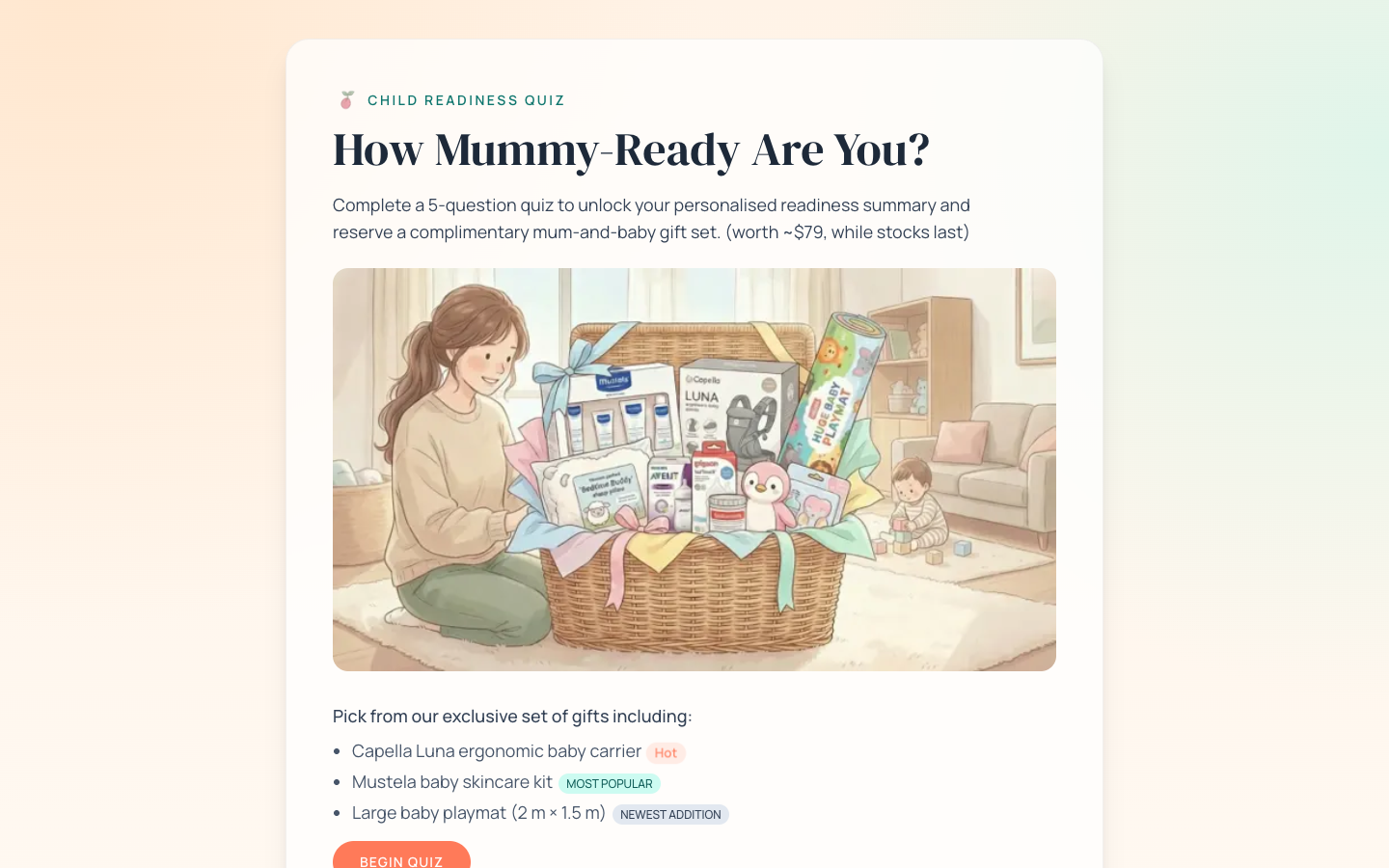
A senior insurance director had a good idea for starting family-planning conversations, no developer, and about two weeks of runway. In about ten days we turned it into a live quiz funnel with 24 personalised referral codes, automatic routing to the right advisor, and analytics from first tap to confirmed slot.
The problem worth solving
Nicholas Chong leads a 24-advisor team at AIA. He had noticed something most financial advisors overlook: parents-to-be don't want to talk about insurance. They're privately worried about something else entirely – are we actually ready for this child?
His instinct was to lead with that question instead.
A short, warm quiz, something that helps a couple see how prepared they really are. It gives them a clear picture before ever asking for their contact details, and then invites them to a readiness review with an advisor.
He had the insight and the team. He didn't have a developer, a designer, or the bandwidth to manage a software project.
That's where I came in, with the same forward-deployed approach used in live UAT with insurance advisers at Mindreader.
What I actually built – and why each decision mattered
A mobile-first quiz funnel at mummyready.com, built around one principle: every screen should earn the next tap.
Five questions, one per screen, lead to one of four readiness tiers with specific planning gaps. Visitors get a useful result before being asked to book a review.
Booking before contact details. Visitors choose a weekday or weekend, then a time of day, and only then share their name and number. They see what they're booking before handing over their details.
24 personalised referral codes, routed automatically. Every advisor has their own link. When a booking comes in, they get an email with the visitor's tier, their specific blind spots, and their preferred slot. The team lead is copied. Nobody sorts leads by hand.
Tracking covers each quiz step through booking submission, so the team can see where visitors drop off.
I built the funnel using Cursor and Claude Code and hosted it on Vercel. From the first commit to the live funnel took roughly ten days.
The rollout question nobody asked
Once the build was done, a quieter question surfaced.
Would 24 busy advisors actually use it?
I've seen tools built well and adopted badly. An announcement and a walkthrough document weren't going to cut it. So the launch was a working session, not a presentation.
On rollout day, 12 advisors completed the quiz on their own phones, using their own referral links. They watched their own booking confirmation email arrive a few seconds later. They experienced exactly what a client would experience.
That one session did more for adoption than any documentation would have.
As someone without a technical background, I could focus on the business idea while Tony translated it into a working prototype our team could understand and build on. Even without a development team on our side, he handled the technical side while keeping the focus on the business goal.
 Nicholas ChongSenior Director, AIA
The honest part
Seven weeks in, the system had routed every booking to the right advisor, instantly, with full context.
Genuine prospect bookings were a handful. Not a flood.
The booking flow worked, but we hadn't established whether advisors would choose to bring it into their everyday client conversations.
They already had offers, FAQs, and familiar ways to engage clients competing for their attention. For some, starting a conversation was difficult enough; introducing a new quiz added another step. A working site and a successful walkthrough didn't tell us whether it made that interaction easier.
If I ran it again, I'd test that fit earlier:
- Ask a small group of advisors how they currently start conversations and when this quiz would be useful
- Try a ready-to-forward message in real client conversations, then ask what made advisors use it or leave it aside
- Track sharing alongside quiz starts and bookings, so we can distinguish low advisor adoption from visitors dropping out
Those checks would help us decide whether to improve the funnel, change how it was introduced, or rethink where it belonged in the team's work.
What I'd do differently
The build was the easy part to judge. The harder question was what the build could not do on its own.
Nicholas's idea had a clear rationale. What I hadn't tested early enough was whether his advisors would choose it over the ways they already engaged clients. The next step was to understand where it helped them start a conversation, what got in the way, and whether they would come back to it without a reminder.
That is the change for next time: test the idea with the people expected to use it, alongside the leader who asked for it, before the build starts.
Live at mummyready.com ↗
Building something similar, such as a diagnostic quiz, a referral flow or a first working version of a good idea? See how I help.