Google Crowdsource × Explore ML: teaching machine learning to 900 non-technical learners across Asia
Google's Crowdsource program partnered with Explore ML to teach machine learning to people who had never written code. Google picked 30 volunteer facilitators from 13 countries to deliver it. This case study covers the constraint the program faced, the teaching model that made the material land with non-technical adults, how the workshops ran, and what they produced, from about 900 learners to single sessions of 230 people.
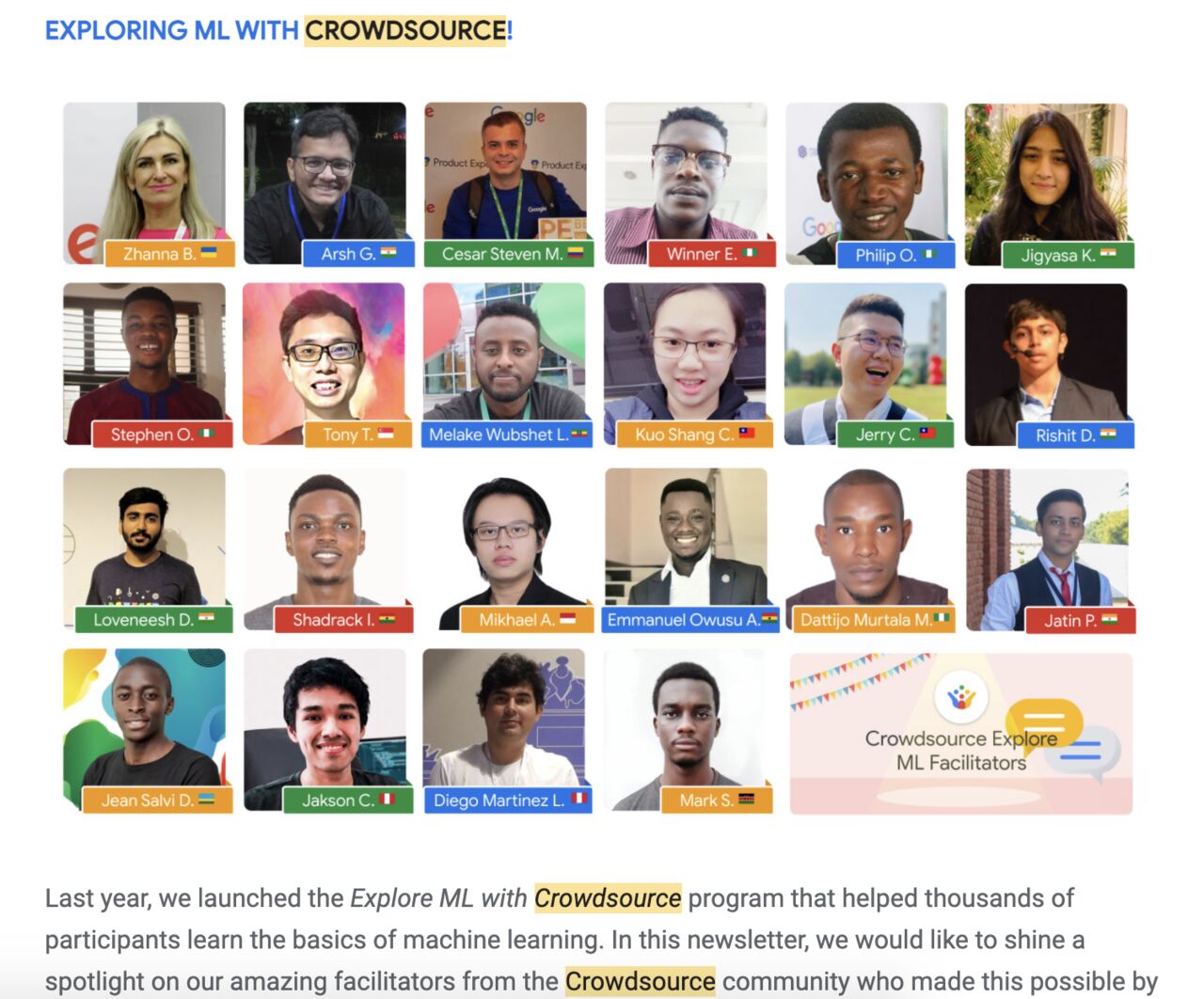
Within Google's Crowdsource program, the Explore ML partnership faced the problem most companies hit when they roll out AI today: the people it needed to reach were sure machine learning wasn't for them. Google selected 30 volunteer facilitators from 13 countries to teach it to people with no technical background, across Asia and beyond. The facilitators were certified to teach both the Beginner and Intermediate tracks.
The program: Google Crowdsource and Explore ML
Crowdsource was Google's app for volunteers to label data: checking translations, tagging images, transcribing handwriting. The program's mission was diversity in AI: if people from Southeast Asia don't contribute data, the models don't learn their languages and places. I joined as a Crowdsource Influencer and made more than 10,000 contributions in my first six months.
Explore ML was Google's introductory machine learning curriculum, until then taught only to university students by student facilitators on campus. The Crowdsource partnership opened it to the public. Google chose the 30 facilitators from hundreds of applicants, picking community builders rather than only technical people. Selection was followed by a month of train-the-trainer sessions with Google engineers and a presentation to pass.
The difficulty: a specialist subject, a nervous audience, no local base
The constraint was the audience. Most people the program wanted to reach believed machine learning was for PhDs at big tech companies: that you had to code, needed the right degree, and would one day lose your job to it. The curriculum had been written for university students, and now had to work for business people, career switchers and students in the same three-hour Zoom call, many joining from countries where English was a second language. It is the same room a business faces when it asks a sales team or an admin team to start using AI: capable people, convinced the subject belongs to someone else.
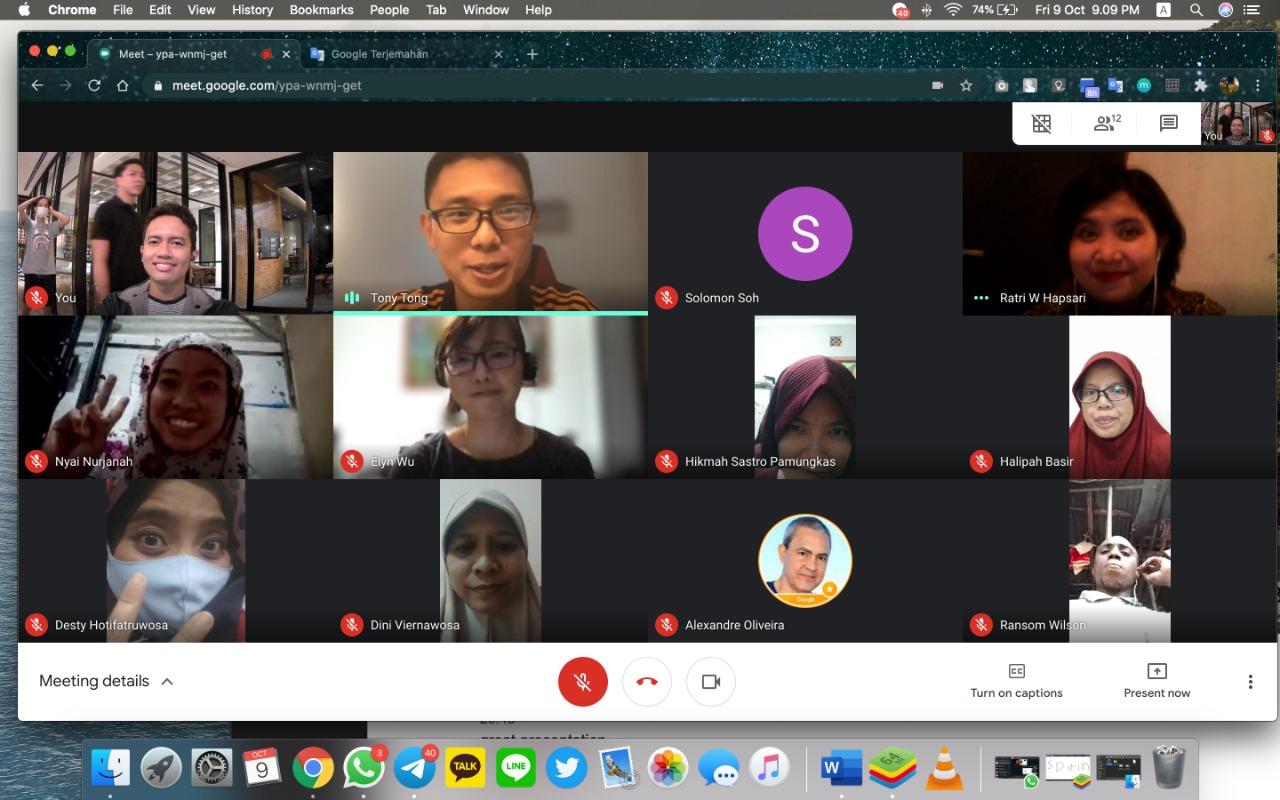
In Singapore there was a second problem: no base to start from. My contact at Google left the company soon after I joined, and for months nobody inside Google was looking after the Singapore community. It took eight months from joining to the first event, a Crowdsource talk on Google Meet that drew twelve people from Brazil, Laos, Indonesia and Singapore. Two weeks later came the first Explore ML workshop, and it had exactly one participant.
The model: how adults without a technical background learn machine learning
Google fixed the curriculum. The slides, the three-part structure (what machine learning is, how a neural network trains, how to frame an ML problem) and the tools (Quick, Draw!, TensorFlow Playground and Teachable Machine) were the same for every facilitator. What facilitators controlled was the script: how each idea was introduced, in what order, and with which examples for which audience. That is where the teaching model sat.
The model came from one observation, repeated across sessions: non-technical adults don't struggle with the concepts. They struggle with the belief that the concepts aren't for them. So the sequence was built to remove that belief before teaching anything, then to let people prove it wrong with their own hands.
1. Know who is in the room
The organisers' pre-workshop survey grouped people by background (business, software, maths, other) and goal (a tech job within two years, upskilling, or understanding how AI would change their work). The answers decided which examples were used. A room of business people got pricing and customer examples. A room of students got career examples.
2. Name the myths out loud
"You need to code." "ML is only for tech people." "You need qualifications." "It will automate my job away." Saying them at the start gave people permission to admit they believed them, and set up the rest of the session as the evidence against them.
3. Play before explaining
Google's QuickDraw game, which guesses what you're sketching, did in two minutes what slides couldn't. Drawing slowly let the room watch the model change its mind. Then came an exercise I added: list the rules a computer would need to recognise a carrot, as if describing one to a friend who had never seen one. After ten rules, everyone could see the list would never end. That is the moment machine learning makes sense: you give the computer examples instead of rules. A short quiz then tested the idea: which jobs need ML, and which are better with plain rules? (Sorting songs A to Z and processing payments: rules. Pricing a house or recognising an object in a photo: ML.)
4. Cover bias and privacy before anyone gets excited
Before the hands-on part, the session covered how models learn our biases from the data we give them, and how much the apps on our phones know about us. The question every participant was meant to leave with was, "When someone pitches you an AI product, what should you ask them?"
5. Train a model without writing code
In TensorFlow Playground, working through the exercises from Google's Machine Learning Crash Course, everyone got the same challenge: get the model's error score as low as you can within 500 training rounds, by changing how big the model is and how it combines its inputs. Regularisation, a setting that stops a model learning too fast and the hardest idea in the track, got an analogy I added: it is a car's brake. Without it, the model learns too fast and makes sweeping generalisations, like assuming every cat is black because the first one it saw was. In Teachable Machine, each person then trained a simple image recogniser to tell apart three things on their desk, was asked to trick it, and was asked how many photos each class needed before they'd trust it.
6. Apply it to a real problem
In small groups, participants brainstormed on digital sticky notes and pitched a machine learning project: the problem, who it helps, the type of ML problem, the data needed, and the privacy and bias concerns. Pitching turned the session from "I watched a demo" into "I could scope one".
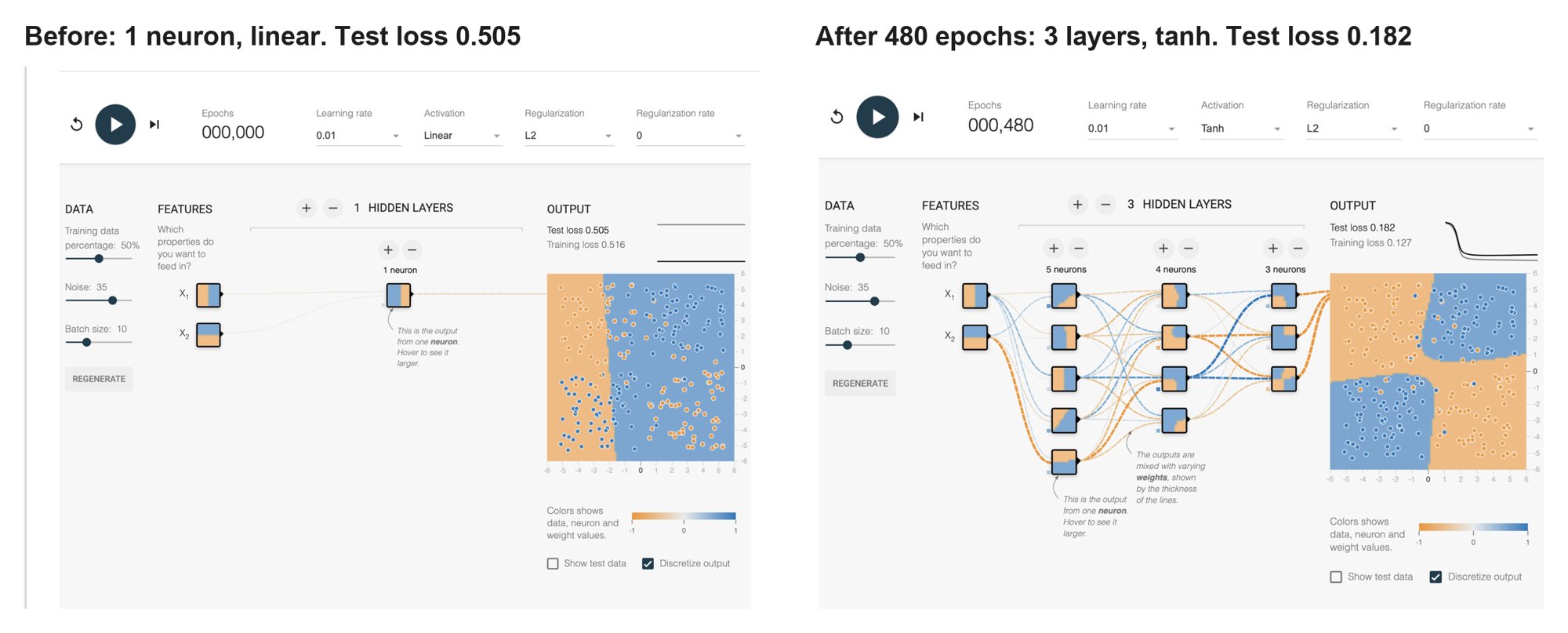
The delivery rules mattered as much as the sequence. The workshop script records the ones that held up across sessions:
- Ask "What questions do you have?", not "Does anyone have questions?" The first assumes questions are normal. Then wait a full 15 seconds before moving on.
- Keep part one short. Notes after early sessions say the introduction ran too long, so it was trimmed each time. Asking people to arrive 10 minutes early fixed most audio and setup problems before they ate into it.
- Prepare for the predictable questions. The same ones came up every time ("Which programming tool should I learn first?", "I wasn't taught maths at university, can I still learn this?"). Answering those well left room for the rest.
The structure: how the workshops ran
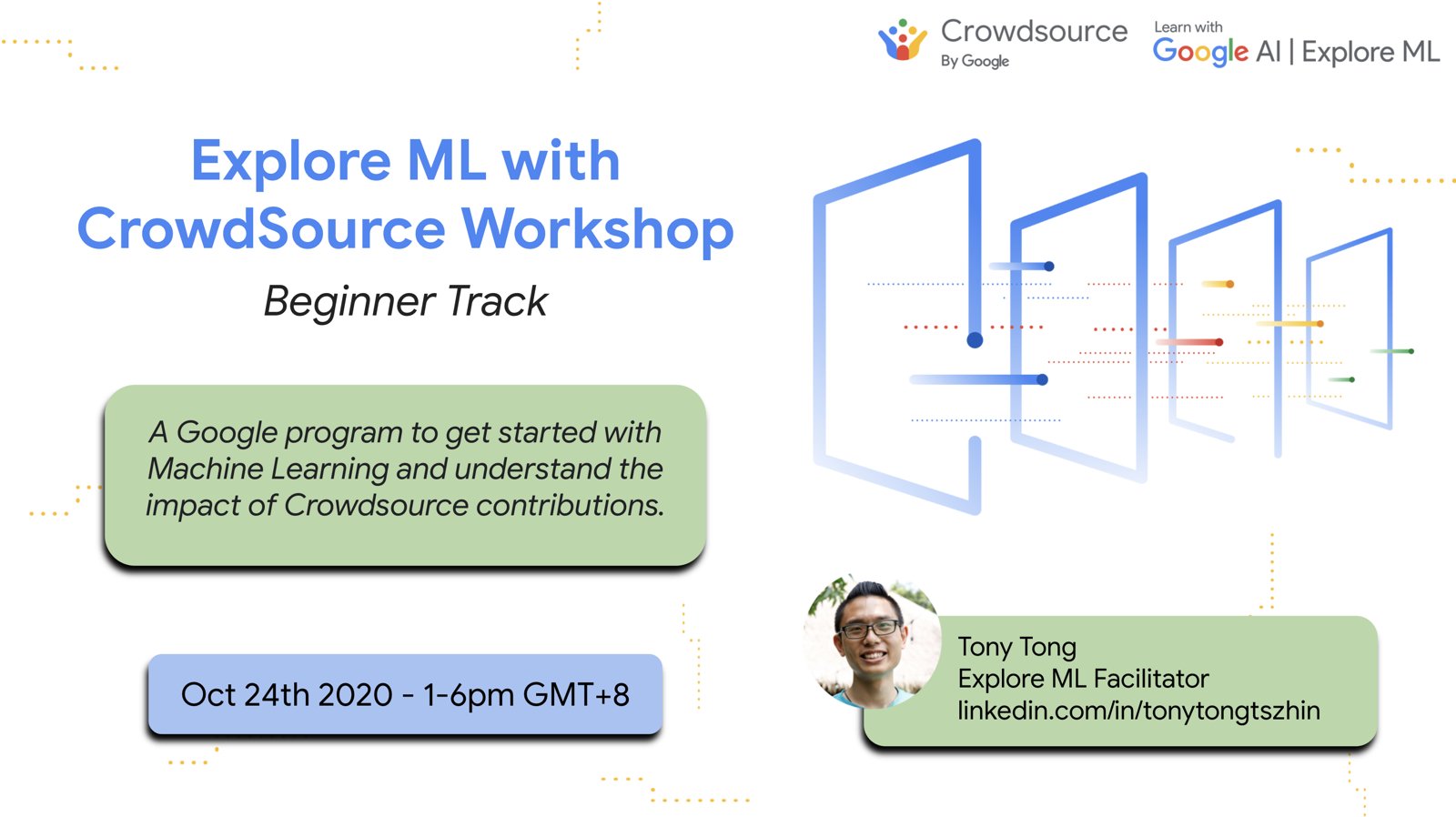
Each session ran for about three hours on Zoom, usually with a co-facilitator from another country (Naman Mishra from India, Zhanna Burunina from Ukraine, Jane, and Rishit Dagli at different points). Facilitation was split into three roles, a structure I added so no single voice had to do everything: a "bad cop" (code of conduct, you'll need a computer for the exercises), a hype person (have fun, ask anything) and a "good cop" (how to ask on Slido, how to get your certificate). Live captions were on for anyone with audio problems.
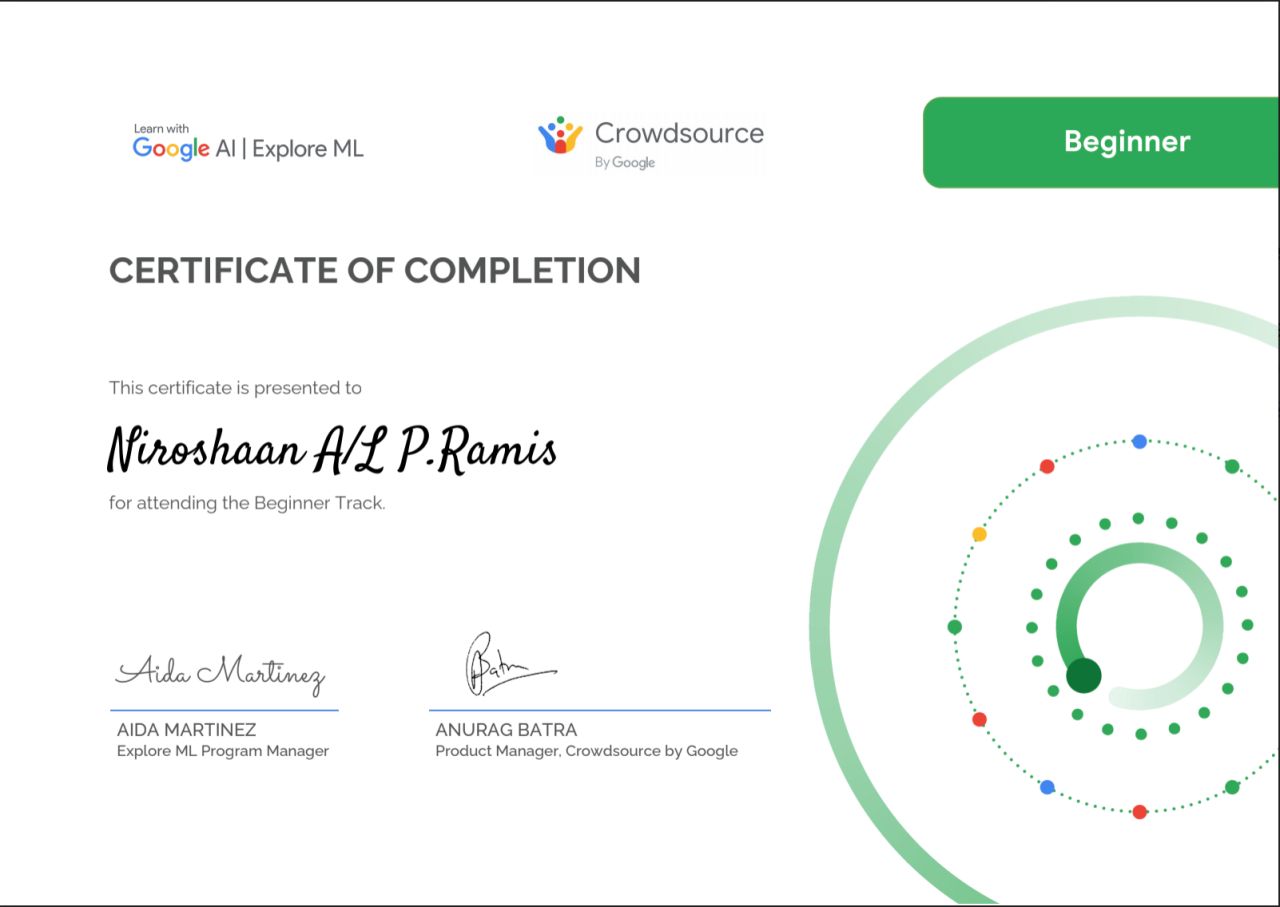
Everyone who completed a workshop received a certificate of completion from Google.
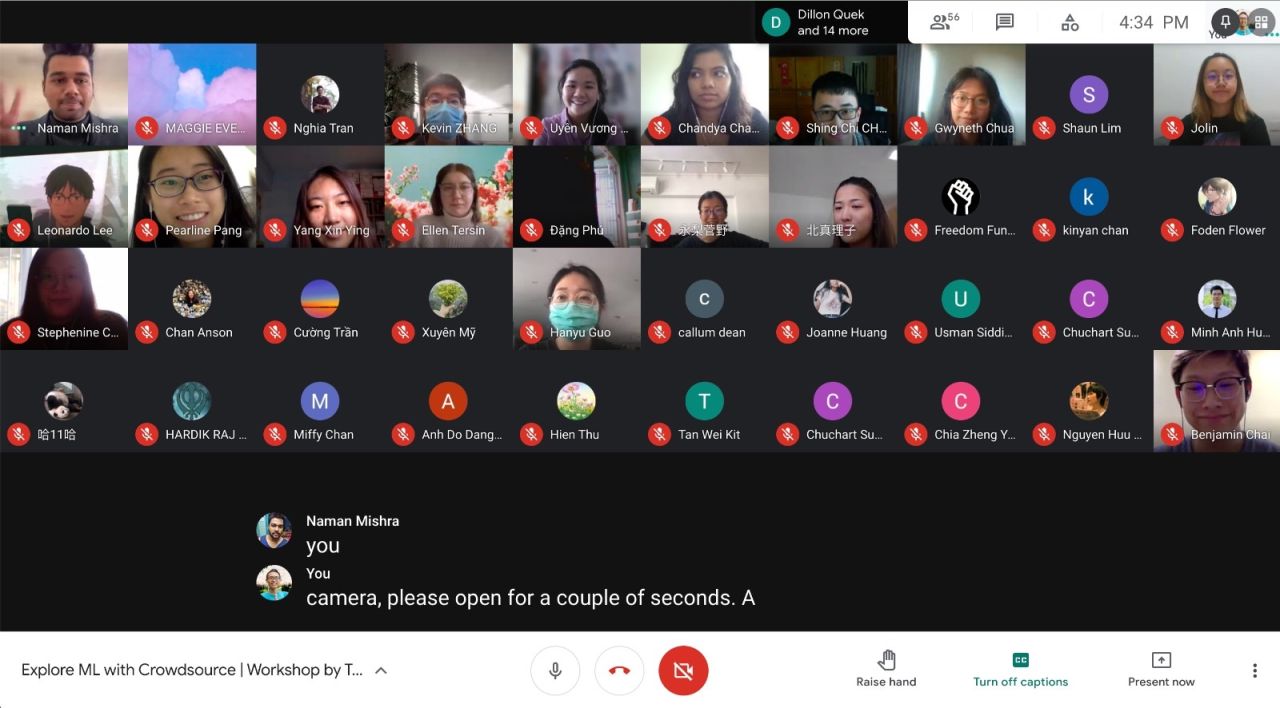
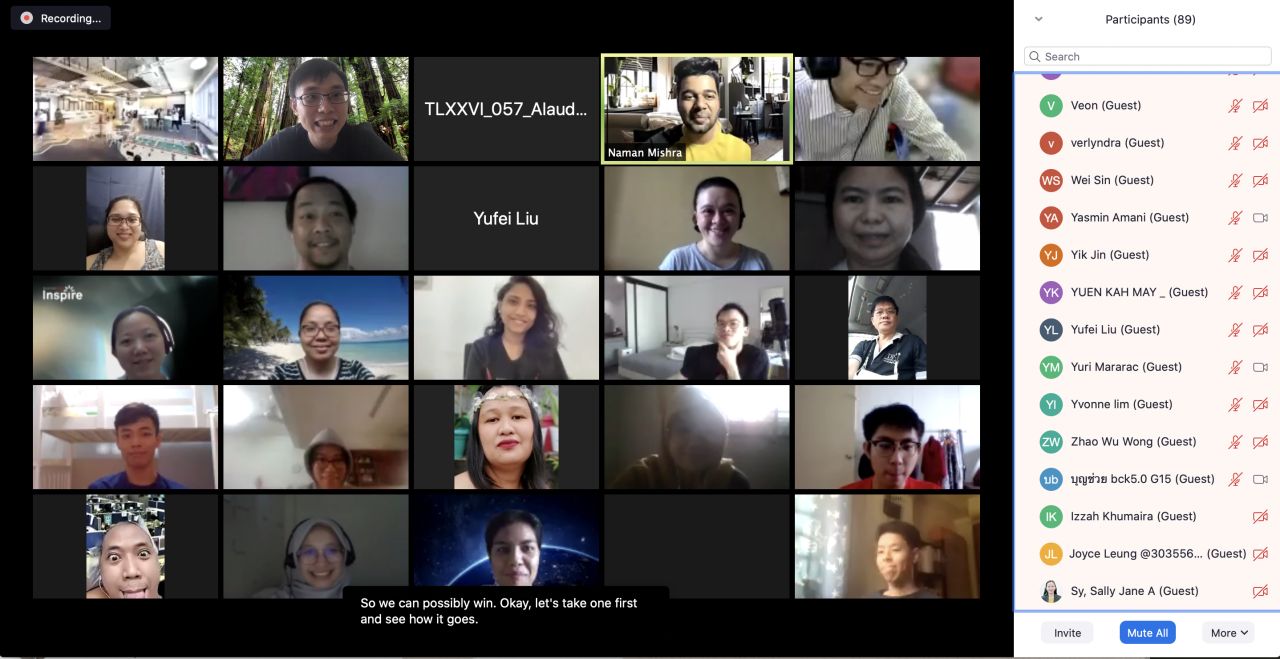
A workshop ends after three hours, so past participants were invited into an alumni LinkedIn group, Google Crowdsource x Explore ML. New members were tagged in small batches and asked to introduce themselves using the organisers' three-part format: #SelfIntro (who you are, where you're from), #Ask (what help you need with courses, contacts or job hunting) and #Give (anything you could offer, technical or not).
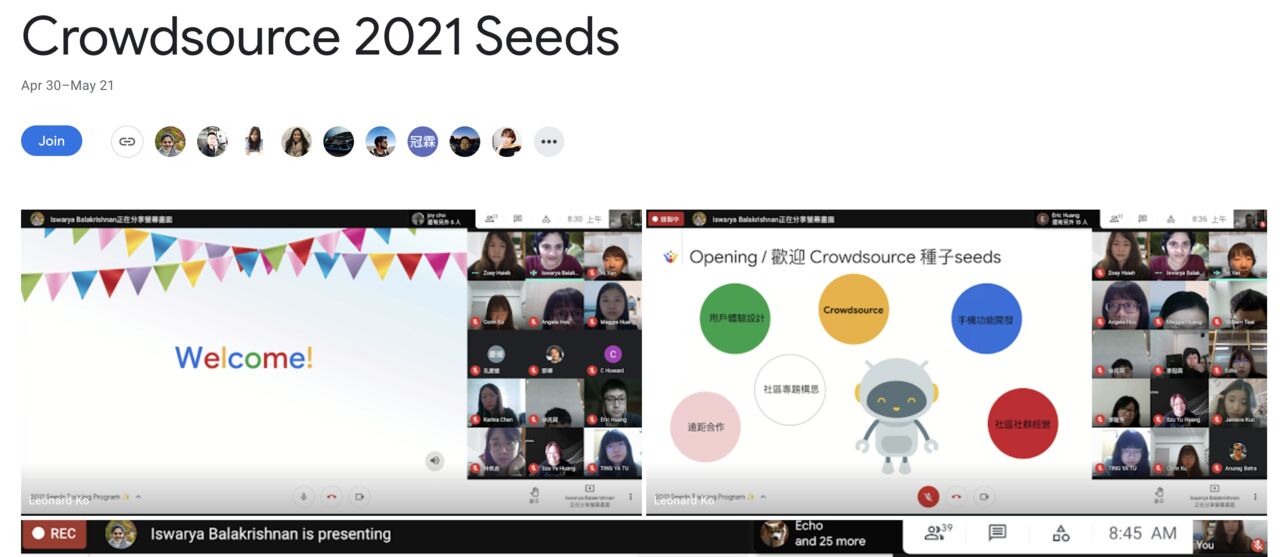
The program then grew into Taiwan. Google Crowdsource's Taiwan Seeds program asked me to mentor its student organisers on running events with confidence, and I spoke at their virtual camp. The material was the program's own difficulty: the one-person first workshop, and why confidence comes from having already seen an empty room. I wrote about the mentoring on LinkedIn.
The result
Across nine workshops with attendance records, about 900 people took part. Attendance went from one person at the first workshop to 80–90 a session within two months, and peaked at 230+ in March, when Google's regional program manager sent the invite to about 500 people instead of her usual 200 and students from a university in Vietnam joined. The alumni group reached 308 members. Google Crowdsource featured the facilitator cohort in its quarterly newsletter.
The participants' own words are the clearest evidence that the model worked for people without a technical background:
I learned a lot from you today and you made your explanations digestible for beginners like me.
I attended Crowdsource workshop today and gained a deeper knowledge about Machine Learning. Thank you for such a valuable lesson, which benefits me a lot!
Many participants posted about the workshops unprompted. Two of those posts, from Niroshaan P Ramis and Wan Nurul Adibah:
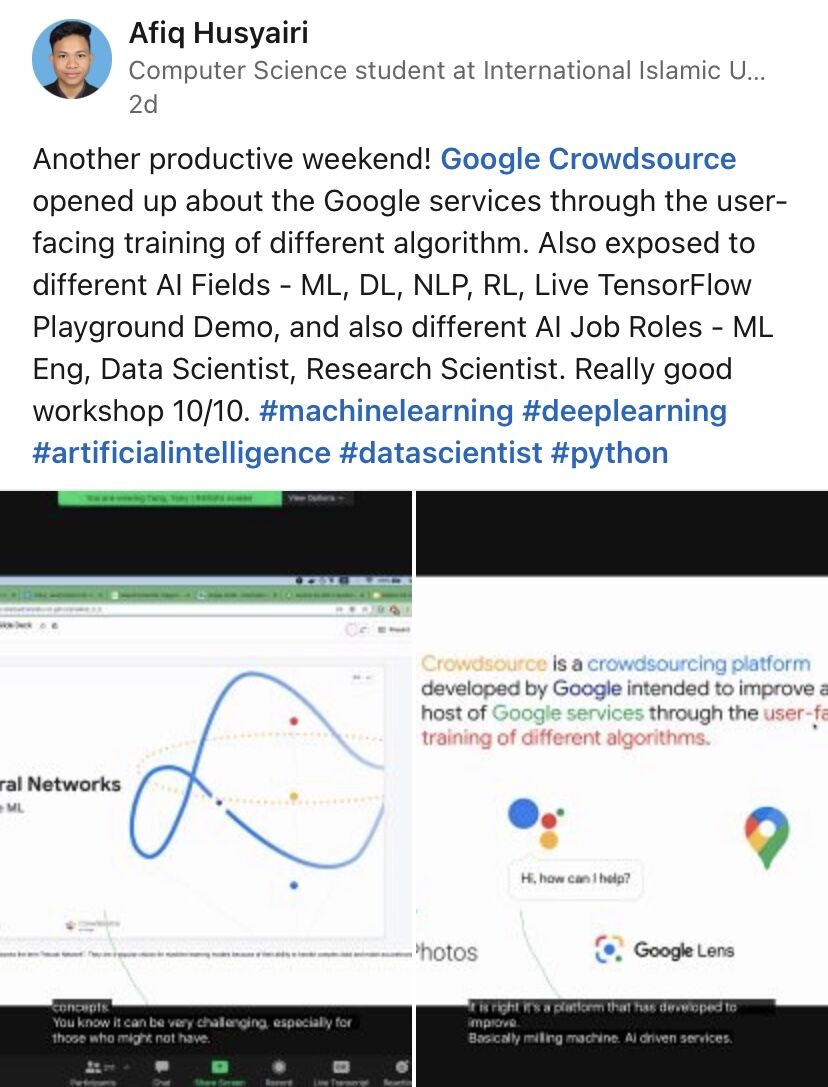
It was a truly eye-opening experience to learn about your journey with Google Crowdsource and you definitely brought a lot of inspiration to participants like me.
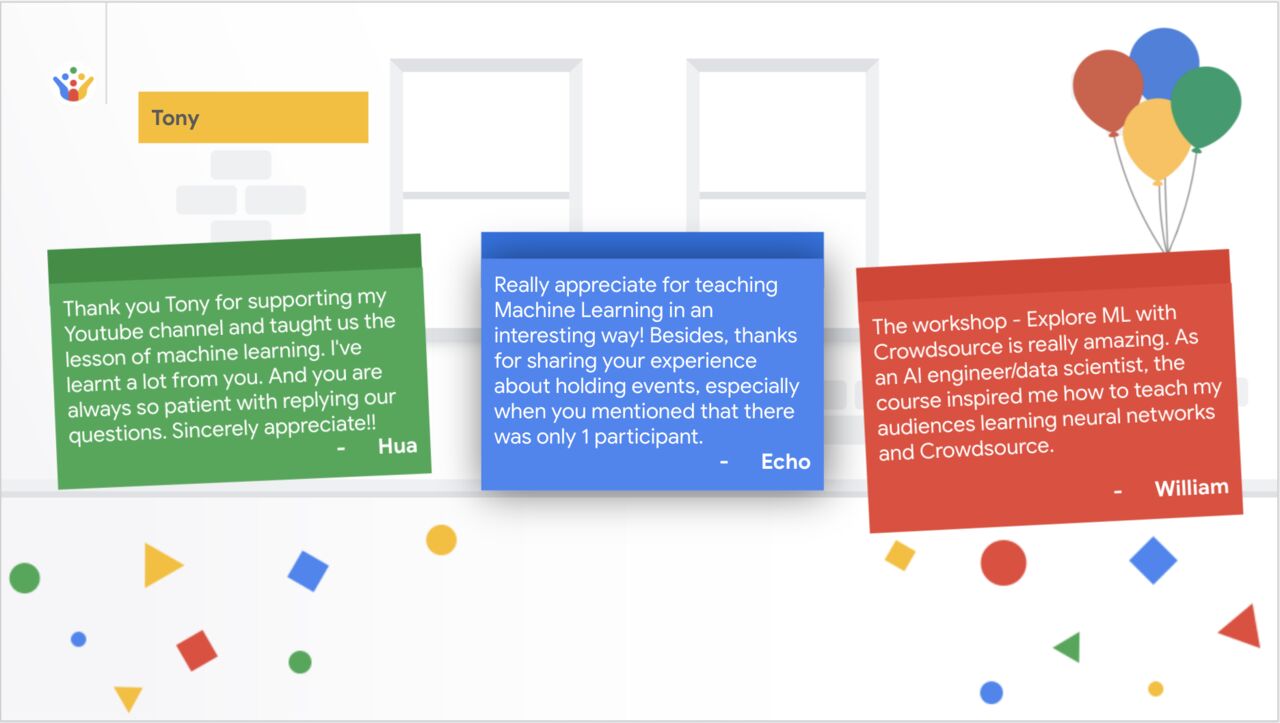
At the end of the program, Google Crowdsource collected notes from participants on a #gratitudewall:
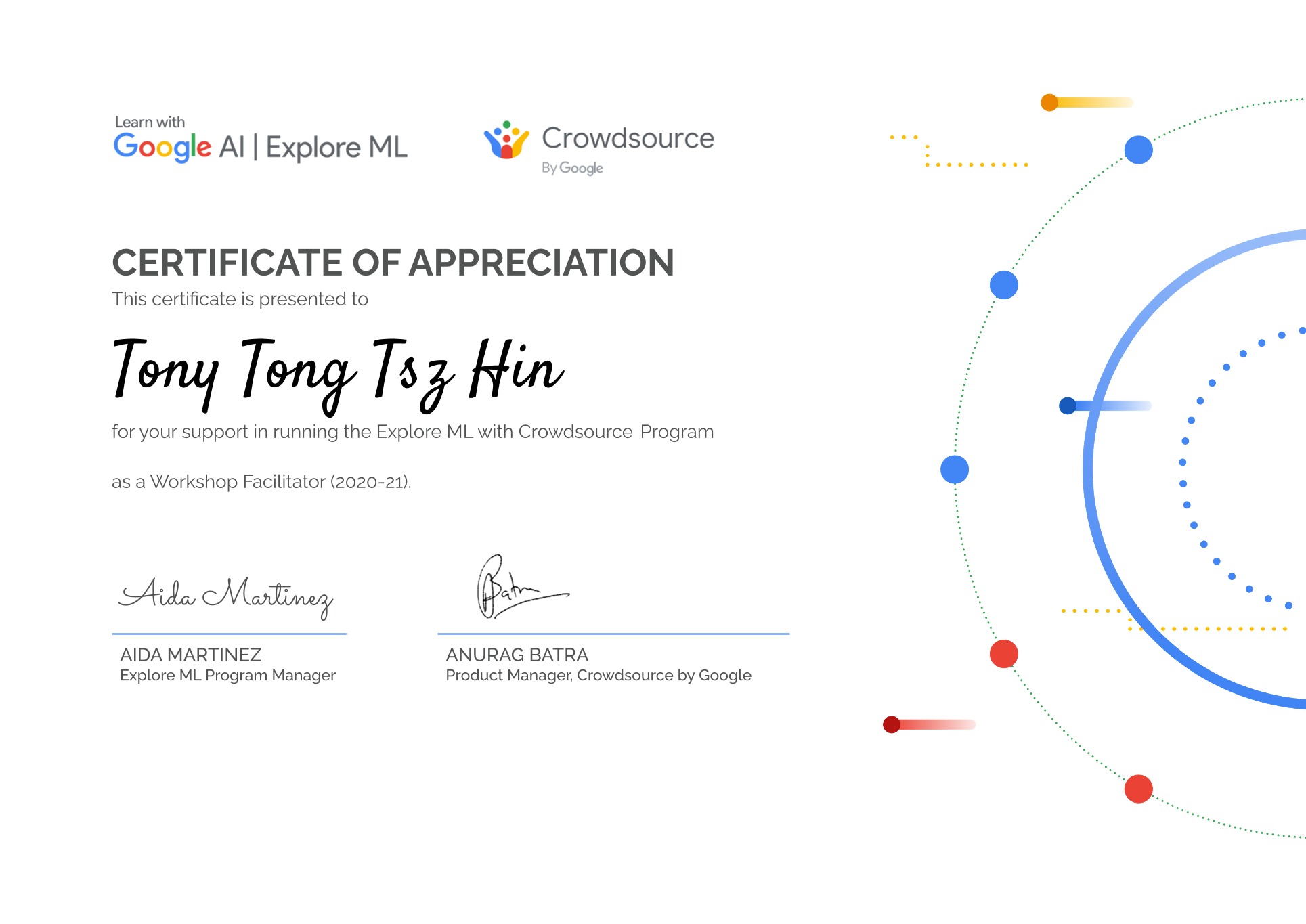
At the end of the 16-month term, Google AI issued a certificate of appreciation.
The tools have changed completely since then. The model hasn't: remove the belief that the subject isn't for them, let people play before explaining, cover the risks, then have them apply it to a problem of their own. The same sequence runs the AI workshops I deliver for businesses today.